As parents, it’s natural to want to swoop in and fix whatever needs fixing for our children, especially when they feel anxious.
When a child is distressed, overwhelmed, or worried, everything in us wants to make it stop. We reassure them that they’re safe and that everything will be okay. We explain and rationalize why the scary thing won’t happen. We step in quickly. We remove obstacles. We accommodate, bulldoze, or hover… all in the name of love.
This month, we’re focusing on a different way of showing our kids that love: not by stepping in to remove every obstacle, but by creating opportunities for them to build skills, confidence, and resilience even while anxiety is present.
One of the most important things research and clinical experience have taught us is this: helping anxiety disappear in the moment doesn’t always help kids in the long run.
How Anxiety Shows Up at Different Ages
As our children grow from toddlers into teenagers, they express anxiety and seek our help in different ways. The way we try to fix their anxiety often changes too.
Across all ages, these responses come from love, but they can unintentionally teach kids to avoid anxiety rather than build coping skills.
Why “Fixing” Anxiety Can Backfire
Anxiety is designed to demand action. When adults rush in to fix anxiety through reassurance, avoidance, or accommodation, anxiety often quiets down temporarily. The problem is what the brain learns next.
When discomfort is consistently removed, the anxious brain takes note:“I can’t handle this unless someone helps me.”
Over time, confidence shrinks. Avoidance grows. Families can find themselves stuck in cycles that feel exhausting and confusing.
This isn’t because parents are doing something wrong. It’s because anxiety is incredibly persuasive.
Here's What Actually Helps:
The most effective approaches to anxiety don’t aim to eliminate discomfort. They help kids learn that they can tolerate it.That looks like:
Staying emotionally connected without rescuing
Validating feelings without reinforcing avoidance
Setting predictable, supportive limits
Encouraging small, brave steps even when anxiety is present
In therapy, we often remind families: Our job isn’t to make kids feel better. It’s to help them get better at feeling.
What to Say When Your Child Is Anxious
Parents often ask, “Okay, but what do I say instead?”. Here’s a simple script we teach families:
“I see that you’re anxious and that makes sense.”
“I believe you can handle this.”
“I’m here to support you, not rescue you.”
“What’s one small step you can take?”
This approach reduces anxiety over time and builds confidence. It takes effort and practice, but it does work.
Because the instinct to fix anxiety is especially strong during the middle school years, we wanted to share a resource we recently created for parents of 6th–8th graders.
This one-page handout was developed for a parent presentation on performance anxiety and pressure in middle school and focuses on what’s developmentally normal during this stage — fluctuating grades, uneven effort, big emotions — and how parent responses can either increase anxiety or support resilience.
It also explores the shift from “director” parenting to “coach” parenting and offers practical ideas parents can try right away to reduce pressure, build confidence, and support growth without over-fixing.
News & Updates
National Eating Disorder Awareness Week
February 23–March 1
This month, we want to intentionally acknowledge National Eating Disorder Awareness Week, a time focused on increasing understanding, reducing stigma, and encouraging early, compassionate support.
Eating disorders often co-occur with anxiety and OCD and don’t always look the way people expect. They may show up as rigidity, distress around uncertainty, control-based behaviors, or an intense focus on performance or “doing things right.” These patterns are sometimes dismissed as phases, when they can signal underlying anxiety or an emerging eating disorder.
At Houston Anxiety & Wellness Center, we have clinicians who specialize in treating eating disorders using evidence-based approaches, including CBT, ERP, and anxiety-informed care. Early identification matters, and support rooted in compassion rather than pressure can make a meaningful difference.
We’re also excited to be participating again in this year’s National Eating Disorder Awareness Week as a registered collaborator. The 2026 theme, Every BODY Belongs, highlights the importance of inclusive, affirming conversations about eating disorders and recovery. Throughout the week, we’ll be sharing trusted educational resources and contributing to community-wide awareness efforts.
Don’t miss our recent blog posts which focus on how anxiety, pressure, and the urge to “fix” can sometimes show up around food, health fears, and control — especially in high-achieving kids and teens. These posts are meant to increase awareness, reduce stigma, and help parents respond thoughtfully rather than reactively.
When Parents Change, Children Improve: A SPACE-Based Approach to Anxiety
We’re proud to share that Alyssa Hertz, PsyD, psychologist at Houston Anxiety & Wellness Center, will be presenting at the upcoming Houston Psychological Association online CEU lunch.
This training, hosted by the Houston Psychological Association, is designed for clinicians, school professionals, and other providers seeking an evidence-based approach to childhood anxiety. Attendees will learn how to:
identify and assess family accommodations
reduce accommodation while increasing supportive responses
set supportive limits with caregivers
coach parents through behavior change
manage caregiver and child distress
Dr. Hertz specializes in evidence-based treatment for anxiety, OCD, and eating disorders across the lifespan, with a strong focus on parent-based intervention using the SPACE model. We’re proud to support ongoing education for providers serving families in our community.
Any professional interested in attending can register here →
RECENT PODCAST
Raising Resilient Kids in an Overwhelming World
Dr. Ivy Ruths recently joined the Anxiety Society Podcast for a conversation about one of the most common patterns seen in families navigating anxiety: the instinct to rescue children from discomfort rather than helping them build the skills to move through it.
In the episode, Dr. Ruths and Elizabeth McIngvale explore the difference between supporting children and unintentionally fragilizing them. They discuss how well-intentioned reassurance, pressure around performance, and parental anxiety can shape a child’s confidence over time.
Key themes from the conversation include:
Why unconditional love must be louder than achievement
How short-term relief can sometimes conflict with long-term resilience
The subtle ways parental anxiety is transmitted to children
Why anxiety itself isn’t the enemy — avoidance is
It’s an honest, practical discussion about raising capable kids without raising their stress levels.
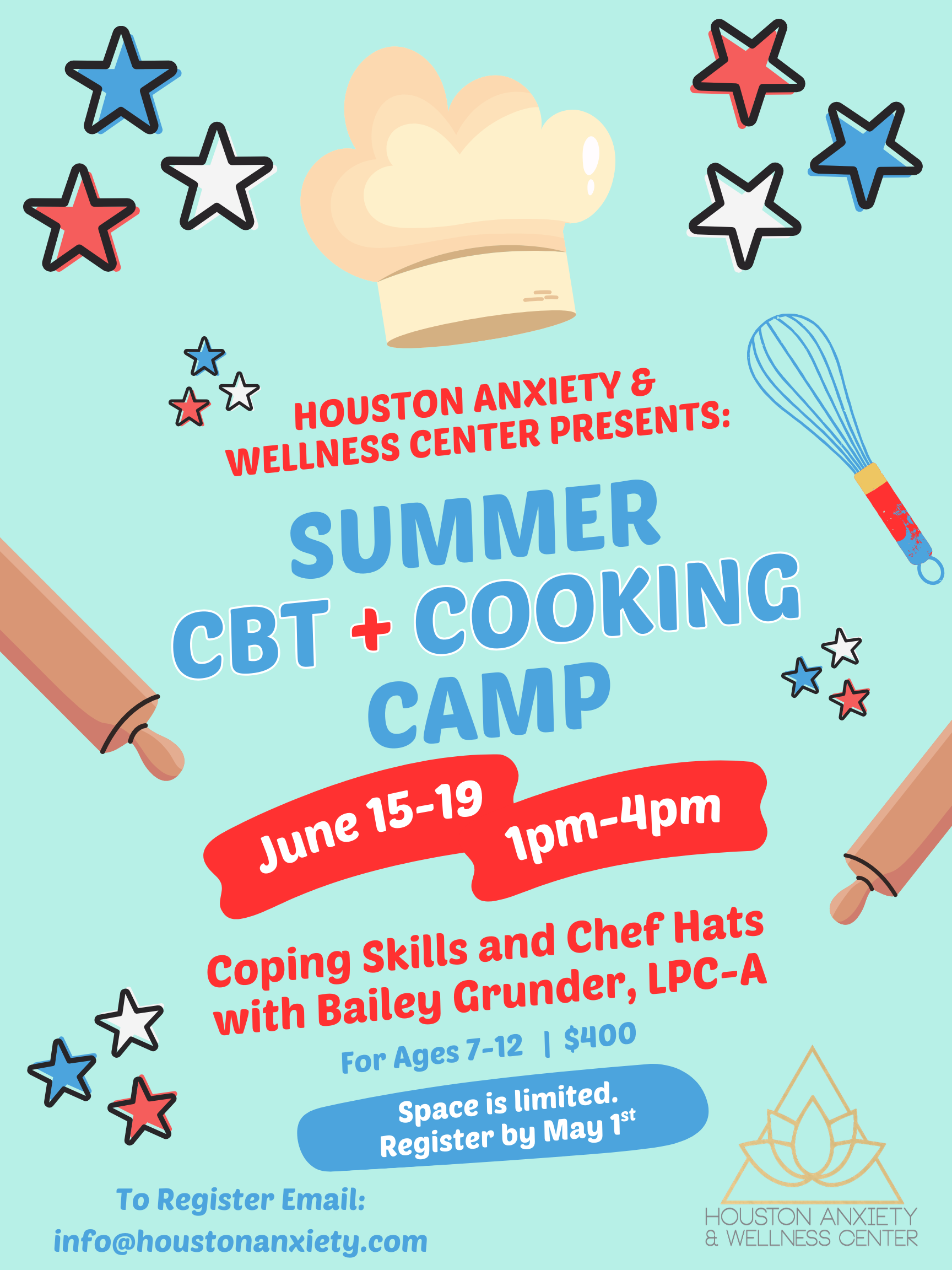
These camps blend evidence-based CBT skills with creativity, hands-on activities, and confidence-building experiences in a supportive, developmentally appropriate environment. Campers signed up for both sessions will have an opportunity to eat a packed lunch and have a nice break between sessions.
Spots are limited and tend to fill quickly! To inquire or reserve your spot contact Kim or Lindsey at info@houstonanxiety.com.
SAY HELLO!
Welcome to the Team!
As our practice continues to grow and expand evening and weekend availability, we’re committed to staying responsive and accessible to the families we serve.
We’re excited to welcome Ian Ikpeme as our Client Care and Operations Manager. If you reach out during later evening or weekend hours, Ian may be the kind and helpful voice you hear. He ensures your questions are answered clearly and promptly so you feel supported from the very first contact.
We’re grateful to have him on our team as we continue to grow.
Before You Go!
As winter starts to loosen its grip and spring approaches, late February and March offer great opportunities to reconnect as a family. Shared experiences don’t need to be big or elaborate to matter! Time together, novelty, movement, and laughter all support emotional regulation and resilience.
Shared experiences — whether big or small build connection. And connection remains one of the most protective factors for mental health, especially during busy or emotionally demanding seasons.
A Houston tradition with something for everyone — livestock shows, carnival rides, concerts, and plenty of chances for kids to experience something new at their own pace. Planning shorter visits can be especially helpful for anxious or sensory-sensitive kids.
And one for just the parents: 🍿 Watch the New Season of Shrinking! Laugh-out-loud funny and surprisingly heartfelt, Shrinking stars Jason Segel, Harrison Ford, and Jessica Williams as therapists navigating grief, relationships, and very imperfect coping. It’s smart, warm, and genuinely fun to watch—especially once the kids are finally in bed and you want something entertaining without being heavy.