Kids tell me all of the time that when something feels too overwhelming, they pretend it doesn’t exist. All the while the due date looms over them, increasing their anxiety until they finally have no choice but to race against the clock to finish it. Or eventually let it slide by and ask for an extension, lie about completing it, or simply take the zero.
If I’m honest, I know exactly how this feels. I am currently avoiding planning not 1, but 2, birthday parties for my girls who turn 4 and fourteen at the end of this month. The idea of 2 cakes, 2 invites, 2 sets of logistics… I’m tired just thinking about it!
My avoidance is serving a purpose and for now, I am breathing easy. However, ask me next week and I’m sure I’ll be either cutting corners, asking for favors, or paying way more than I’d like to get it all done. My avoidance is (sort of) working… but just for now.
The Problem We miss at First
The reason we often avoid is because avoidance is incredibly effective.
It lowers anxiety immediately. It reduces discomfort. It restores calm.
If your child doesn’t go to the sports game, their anxiety decreases. If they skip the test prep, the dread fades. If they stay home from school, relief comes fast.
If I avoid planning my daughters' parties, I also avoid thinking about the ache of time moving forward and the almost imperceptible way four becomes fourteen.
As adults:
We postpone hard emails.
We avoid uncomfortable conversations.
We distract ourselves from uncertainty.
Avoidance works… Until it doesn’t.
Because what feels relieving in the short term quietly shrinks confidence in the long term.
Avoidance Reinforces Fear
First, anxiety is not dangerous. It’s a stress response. But when we consistently escape discomfort, the brain learns:
“That was a threat.”
“You couldn’t handle it.”
“You need to get out next time too.”
Avoidance strengthens anxiety. While facing the scary thing in front of us actually builds resilience.
Avoidance is Sneaky!
It’s not always dramatic:
📚 Procrastinating homework
🌀 Asking for repeated reassurance
⚽️ Quitting activities once they get hard
✔️ Needing a parent to “check” everything
🧊 Emotional shutdown when performance is involved
What Actually Helps
Helping a child face discomfort doesn’t mean being harsh.
It means being steady.
Research-supported strategies include:
Normalizing nerves: “It makes sense your body feels activated.”
Separating feeling from capability: “You can feel anxious and still do this.”
Emphasize effort over outcome.
Reduce excessive reassurance.
Encourage one small step instead of total mastery.
Confidence doesn’t come from success alone. True confidence comes from surviving hard things.
Because testing season amplifies avoidance patterns, we recently created a practical one-page guide for parents following our local school presentation on test anxiety.
The guide includes:
What test anxiety actually is
What backfires (even when well-intended)
What to say instead
Practical ways to build coping before and during tests
If your child is navigating testing pressure, this resource offers concrete tools you can start using immediately.
“Fixing” Anxiety Backfires
Avoidance doesn’t disappear when childhood ends. Adults avoid:
🩺 Medical Appointments
💵 Financial Decisions
💼 Career Risks
🪩 Social Situations
💬 Hard Conversations
🧠 Therapy
The pattern is the same: immediate relief followed by long term limitations.
If you’ve noticed yourself postponing something important, try this:
Name the avoidance clearly.
Choose the smallest possible step toward it.
Let discomfort exist without negotiating with it.
Resilience is built through approach, not escape.
When Support Might Be Helpful
If you are finding that you or your child's avoidant behaviors are increasing, structured support can make a meaningful difference.
Our clinicians work with children, teens, and adults using CBT, ERP, and evidence-based approaches that focus on building confidence through skillful exposure.
Bravery rarely feels comfortable at first.But taking risks helps us build a life that is bigger than anxiety.
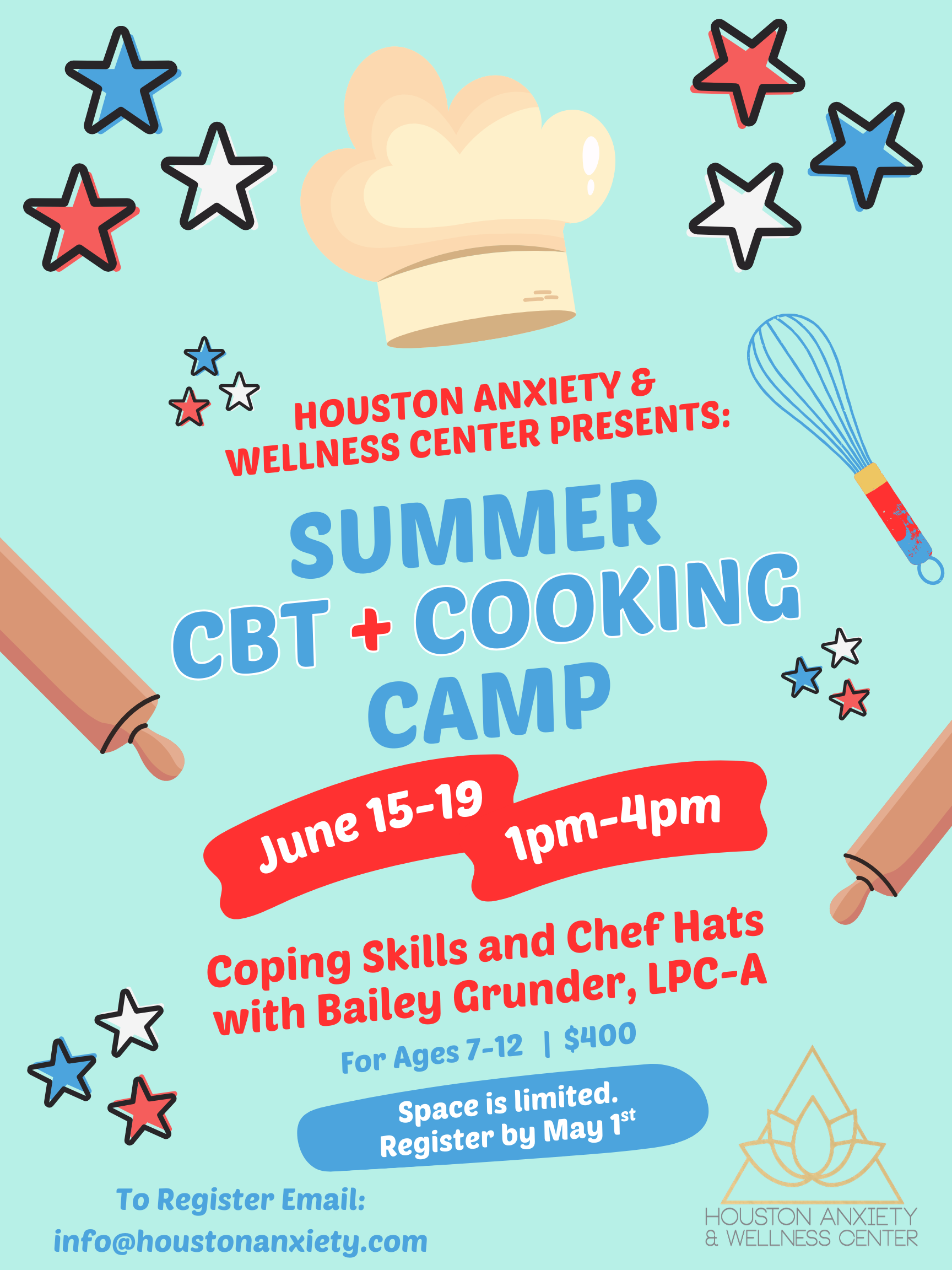
These camps blend evidence-based CBT skills with creativity, hands-on activities, and confidence-building experiences in a supportive, developmentally appropriate environment. Campers signed up for both sessions will have an opportunity to eat a packed lunch and have a nice break between sessions.
Spots are limited and tend to fill quickly! To inquire or reserve your spot contact Kim or Lindsey at info@houstonanxiety.com.
The discussion will bring together clinicians across disciplines to explore how anxiety is showing up in children, teens, and adults — and what families can do to navigate it with clarity and confidence.
🗓 Thursday, April 9th
🕤 9:30–10:30 AM Panel Discussion
🕥 10:30–11:00 AM Community Q&A
📍 Branches Modern Worship | 3471 Westheimer
This event offers an opportunity for families and community members to engage in thoughtful conversation about anxiety in today’s world and hear practical, evidence-based perspectives from local experts.
Not All Harm is Risk: Differential Assessment of Harm OCD, Suicidal Ideation, and NSSI
March 23, 2026
Not all thoughts of harm signal risk-and not all risk presents as intrusive thoughts.This talk will examine the clinical distinctions between harmrelated obsessive-compulsive disorder (harm-OCD) and genuine suicidal ideation (SI) and non-suicidal self-injury (NSSI) urges, with emphasis on accurate assessment and differential formulation.
We are excited to share that Houston Anxiety & Wellness Center is officially launching our Eating Disorders Specialty Clinic.
This clinic will provide structured, evidence-based outpatient care with an Intensive Outpatient Program option, along with strong parent and family-based treatment. Because anxiety, OCD, and eating disorders so often overlap, our approach integrates CBT, ERP principles when appropriate, and family involvement from the start.
The clinic will be led by Dr. Alyssa Hertz, who will step into the role of Director of Eating Disorders Services. Under her leadership, we are building a program that is clinically rigorous, collaborative with medical providers, and deeply relational with the families we serve.
Our goal is to offer specialized, high-quality care for children, adolescents, and adults struggling with eating disorders, including presentations complicated by anxiety and OCD.
WE'RE HIRING!
We're looking for a Fully Licensed Psychologist
As we grow, we are seeking a fully licensed psychologist who specializes in eating disorders and is trained in CBT-E and Family-Based Treatment. PsyPact certification is strongly encouraged.
We are looking for someone who values evidence-based care, enjoys working closely with families, and wants to help build a specialty clinic within a thriving group practice.
If you or someone you know may be a fit, please reach out or share this opportunity.
Accepting New clients
Reminder - Cancellation Policy:
If you are unable to make your scheduled appointment, you must email our clinic coordinators at info@houstonanxiety.com or call the clinic at 832-205-8120 to cancel or reschedule your appointment at least 48 hours before your appointment timeor you will be charged the full fee of your intake or therapy session.